

ACL and PCL Tear Treatment in Louisville, KY
Expert Cruciate Ligament Tear Treatment From a Fellowship-Trained Knee Specialist
A torn ACL or PCL can be a frightening experience. The sudden pop, the swelling, the instability that follows: these are signs that one of the knee's most critical stabilizing structures has been compromised. Whether your injury happened on the field, on the court, or during an everyday activity, the path forward starts with an accurate diagnosis and a treatment plan built around your specific goals and lifestyle.
Dr. Nyagon Duany is a fellowship-trained orthopedic surgeon in Louisville, KY, with specialized training in both sports medicine and total joint replacement. She works with athletes, active adults, and patients of all activity levels to diagnose and treat ACL and PCL injuries with precision and care. Dr. Duany understands that for many patients, a knee ligament injury feels like more than a physical setback; it threatens the activities and lifestyle they care about most. She uses minimally-invasive arthroscopic procedures and takes the time to ensure every patient fully understands their options before making any decisions about treatment.
If you have sustained a knee injury and are looking for a specialist in the Louisville area, use our online form to request an appointment with Dr. Duany today.
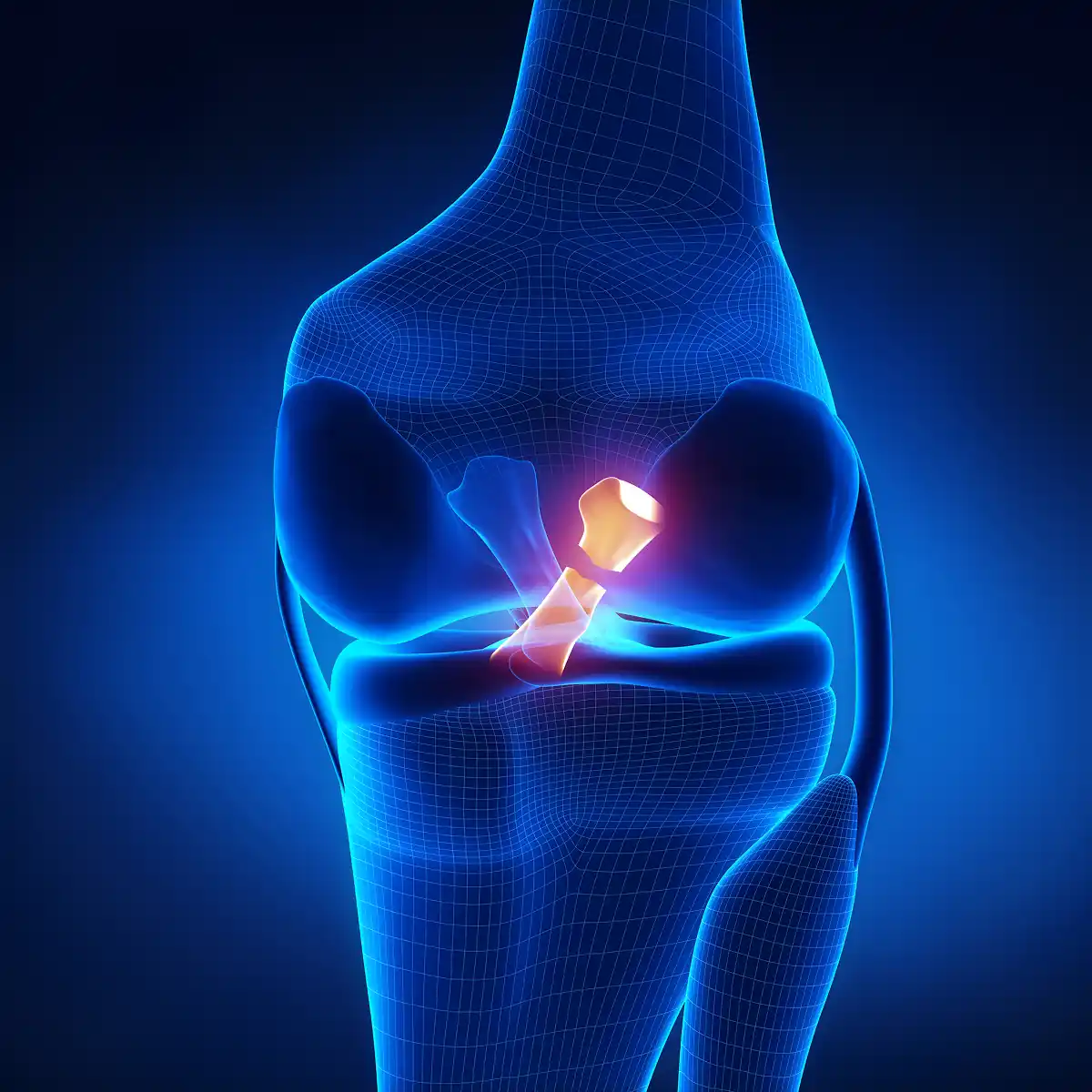
ACL and PCL Injury: Diagnosis, Surgery & Recovery
Understanding ACL and PCL Tears
The anterior cruciate ligament (ACL) and posterior cruciate ligament (PCL) are two of the four major ligaments that stabilize the knee joint. They cross each other inside the knee, forming an X shape that controls forward and backward movement of the shinbone (tibia) relative to the thighbone (femur). Both ligaments are essential for knee stability, particularly during activities that involve cutting, pivoting, jumping, or sudden changes in direction.
ACL Tear Causes and Symptoms
ACL tears are among the most common knee injuries in sports. They most often occur during non-contact movements such as planting and cutting, landing awkwardly from a jump, or suddenly stopping at high speed. Direct blows to the knee can also cause an ACL tear. Common symptoms include:
- A pop at the moment of injury
- Immediate swelling around the knee
- Pain and tenderness along the joint line
- A feeling of instability or the knee "giving way"
- Difficulty bearing weight on the affected leg
PCL Tear Causes and Symptoms
PCL tears are less common than ACL tears but should be taken equally seriously. They most often result from a direct blow to the front of a bent knee, such as in a dashboard injury during a car accident or a fall onto a bent knee in sport. Symptoms of a PCL tear can be subtler and may include mild to moderate pain and swelling, a sensation of instability when going down stairs or decelerating, and stiffness with limited range of motion. Because PCL injuries are sometimes overlooked, it is important to have any suspected knee ligament injury evaluated promptly by an experienced knee specialist.
ACL and PCL Treatment Options
Treatment depends on the severity of the injury, the presence of associated injuries such as meniscus tears or MCL and LCL injuries, and the patient's age, activity level, and personal goals.
For ACL tears in active patients, surgical reconstruction is typically recommended to restore full knee stability. Dr. Duany performs arthroscopic ACL reconstruction — a minimally invasive method that allows most of the procedure to occur inside your body rather than by opening it up — using either the patient's own tissue (autograft) or donor tissue (allograft) to recreate the ligament. The arthroscopic approach minimizes incision size and supports a more efficient, less painful recovery.
For PCL tears, treatment is more individualized. Isolated Grade I and Grade II PCL injuries often respond well to conservative management, including physical therapy and activity modification. More severe PCL tears, or injuries involving multiple ligaments, frequently benefit from surgical reconstruction. Dr. Duany evaluates each case carefully, reviewing imaging and discussing the patient's goals in detail before recommending a course of treatment.
Frequently Asked Questions
What are the symptoms of an ACL or PCL tear?
ACL tears typically produce a sudden pop at the time of injury, followed by rapid swelling, pain, and a feeling of instability in the knee. PCL tear symptoms tend to be subtler and may include moderate swelling, aching pain behind the knee, and a sense of looseness when decelerating or going downstairs. Because both injuries can present differently depending on severity, an evaluation with an experienced knee specialist is the most reliable way to get an accurate diagnosis.
Do I need surgery for an ACL or PCL tear?
Whether surgery is necessary depends on the severity of your injury, your activity level, and your goals. ACL tears in active patients and athletes usually require reconstruction to regain full stability and return to sport. PCL tears are sometimes managed conservatively, particularly for less severe isolated injuries. Dr. Duany will review your MRI, perform a thorough physical examination, and have an honest conversation with you about which path forward best fits your situation and recovery expectations.
What is recovery like after ACL or PCL surgery?
Recovery from ACL or PCL reconstruction is a gradual process that typically involves several months of structured physical therapy to rebuild strength, stability, and range of motion. Most patients can expect to return to light activity within a few months, with return to full sport often taking 6-10 months for ACL reconstruction. PCL recovery timelines vary depending on the extent of the injury and whether other structures were involved. Dr. Duany and her team will guide you through every phase of rehabilitation and monitor your progress closely throughout recovery.
How do I find an ACL specialist near me in Louisville, KY?
If you are searching for an ACL specialist near you or a knee pain specialist in the Louisville area, Dr. Duany makes it easy to get started. Simply fill out our online appointment request form or give us a call at (502) 629-5633, and our team will follow up to confirm your visit. Dr. Duany sees patients at two Louisville locations and is committed to providing expert, personalized knee care to patients throughout the metro area. We look forward to helping you recover and return to the life you love.