

AC Joint Dislocation Treatment in Louisville, KY
Expert Treatment for AC Joint Dislocations From a Fellowship-Trained Shoulder Surgeon
AC joint dislocations, commonly called shoulder separations, are among the most frequent shoulder injuries seen in athletes and active adults. The acromioclavicular (AC) joint, where the collarbone meets the top of the shoulder blade, is vulnerable to injury from direct impact, a hard fall, or a collision during contact sports. When the ligaments supporting this joint are stretched or torn, the result can range from mild soreness and temporary discomfort to significant structural displacement that requires surgical repair.
Dr. Nyagon Duany is a fellowship-trained orthopedic surgeon in Louisville, KY, with specialized expertise in shoulder injuries and sports medicine. She is experienced in the full spectrum of AC joint injuries, from minor sprains to complex dislocations requiring surgical reconstruction. Having experienced a shoulder injury herself as a Division I college basketball player, she brings both clinical expertise and genuine personal understanding to every patient she treats. Dr. Duany evaluates each case thoroughly and develops a treatment plan tailored to the severity of your injury and your goals for recovery.
If you have sustained an AC joint injury and are looking for expert care in the Louisville area, use our online form to request an appointment with Dr. Duany today.
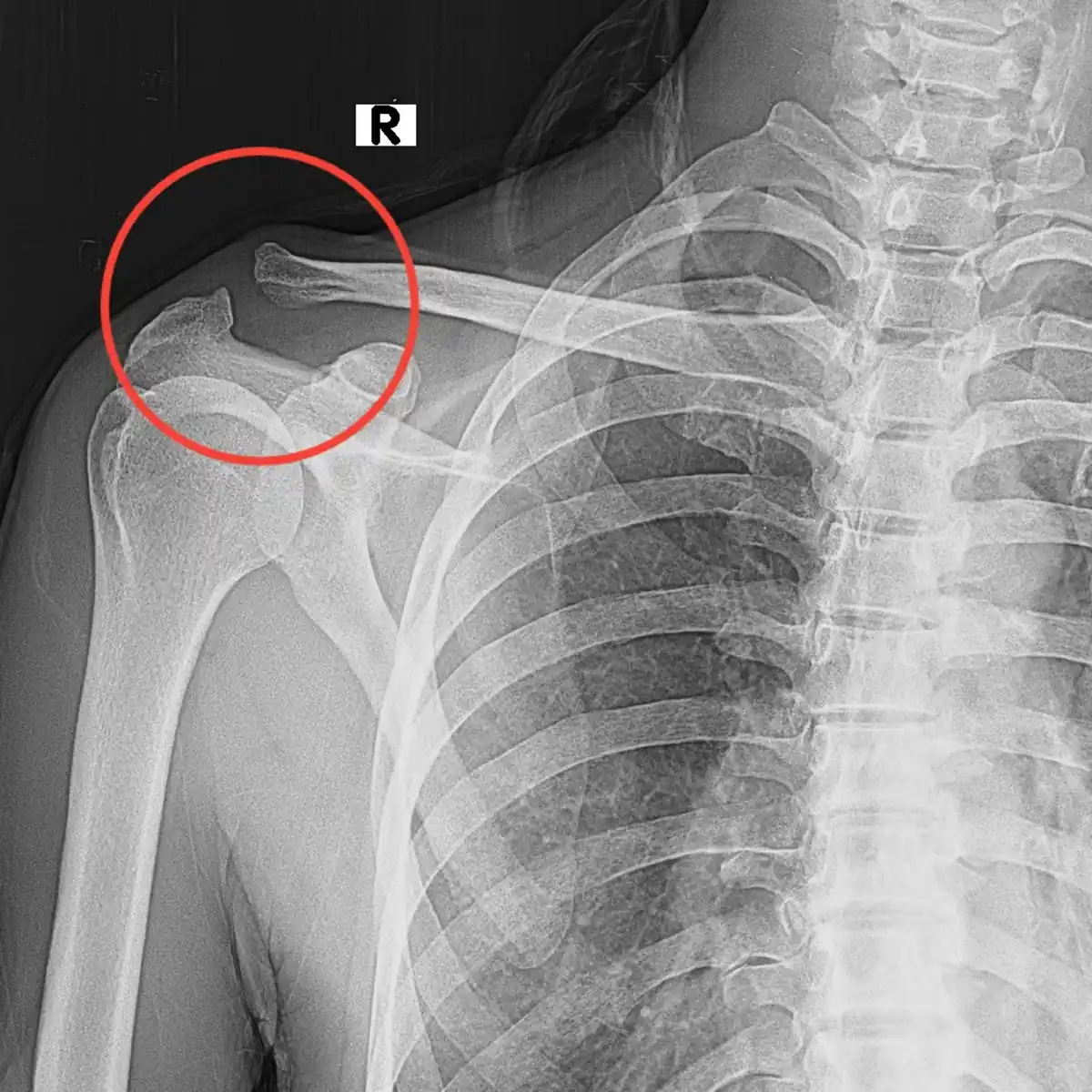
AC Joint Dislocation Causes, Types, Symptoms & Treatment Options
What You Need to Know About AC Joint Dislocations
The AC joint is stabilized by a network of ligaments, including the acromioclavicular ligament and the coracoclavicular ligaments. When these ligaments are injured, the clavicle can shift out of its normal position relative to the acromion, resulting in varying degrees of separation. The severity of the dislocation determines whether the injury can be managed conservatively or requires surgical intervention.
AC Joint Dislocation Causes
Most AC joint dislocations result from a direct blow or fall onto the point of the shoulder. This is a common mechanism in contact sports such as football, hockey, and rugby, as well as in cycling accidents and motor vehicle collisions. The force of the impact disrupts the ligaments that hold the AC joint in alignment, causing the collarbone to shift upward relative to the shoulder blade.
AC Joint Dislocation Types and Grading
AC joint injuries are classified using the Rockwood grading system, which categorizes dislocations from Type I through Type VI based on severity.
Types I and II involve partial stretching or tearing of the AC ligament, with little to no displacement of the joint. These are the most common AC joint injuries and are generally managed without surgery.
Type III involves complete tearing of both the AC and coracoclavicular (CC) ligaments, resulting in noticeable upward displacement of the collarbone. Treatment for Type III injuries may be conservative or surgical, depending on the patient's activity level, occupation, and overall health.
Types IV through VI are more severe, involving significant displacement and potential damage to surrounding structures. These typically require surgical repair to restore normal joint alignment.
AC Joint Dislocation Symptoms
Common AC joint dislocation symptoms include:
- Pain and tenderness at the top of the shoulder
- A visible bump or deformity where the collarbone meets the shoulder
- Swelling and bruising around the joint
- Pain when reaching across the body or lifting the arm overhead
- A feeling of instability or weakness in the shoulder
AC Joint Dislocation Treatment Options
For lower-grade injuries (Types I and II), conservative treatment is typically effective and may include rest and activity modification, ice and anti-inflammatory medications to manage pain and swelling, a supportive sling during the initial healing phase, and physical therapy to restore strength and range of motion.
For more severe dislocations (Types III through VI), surgical reconstruction may be recommended. Dr. Duany performs AC joint reconstruction to restore the normal position of the collarbone and stabilize the joint, using arthroscopic techniques where appropriate. This can allow for a less invasive approach and a more efficient recovery in suitable candidates.
It is also worth noting that patients who sustain a significant AC joint dislocation and do not receive proper treatment are at increased risk of developing AC joint arthritis over time. Early evaluation by an experienced shoulder surgeon is always advisable, both to address the acute injury and to reduce the risk of long-term complications.
Frequently Asked Questions
What are the most common AC joint dislocation symptoms?
The most common AC joint dislocation symptoms include pain and tenderness at the top of the shoulder, a visible bump where the collarbone meets the shoulder blade, swelling, and pain with arm movement. Symptoms vary in intensity depending on the severity of the injury. Even if your symptoms seem manageable, it is important to have the injury evaluated promptly; untreated dislocations can lead to chronic instability and long-term joint damage.
What are the different types of AC joint dislocation, and does the type affect treatment?
Yes, the type of AC joint dislocation directly affects your treatment options. The Rockwood grading system classifies injuries from Type I (a mild sprain) through Type VI (a severe dislocation with significant displacement). Types I and II are typically treated conservatively with rest, a sling, and physical therapy. Type III injuries require a more individualized approach, and Types IV through VI generally require surgical repair. Dr. Duany will assess your injury using imaging and a physical examination to determine the grade and the most appropriate treatment plan.
Do I need surgery for an AC joint dislocation?
Not all AC joint dislocations require surgery. Lower-grade injuries (Types I and II) respond well to conservative treatment, and many Type III injuries can also be managed without an operation. Surgery is typically recommended for higher-grade dislocations, cases that do not improve with conservative care, or patients with physically demanding lifestyles who require full restoration of shoulder function. Dr. Duany will review your imaging, discuss your goals, and give you a clear, honest recommendation based on what is best for your situation.
How do I find a shoulder dislocation doctor near me in Louisville, KY?
If you are searching for a shoulder dislocation doctor near you in the Louisville metro area, Dr. Duany's office makes it easy to get started. Simply fill out our online appointment request form or give us a call at (502) 629-5633, and our team will be in touch to confirm your visit. Dr. Duany sees patients at two convenient Louisville locations and welcomes patients from throughout the surrounding communities. We look forward to helping you recover and get back to the activities you love.