

Biceps Tendonitis Treatment in Louisville, KY
Expert Biceps Tendonitis Treatment From an Orthopedic Shoulder Specialist
Biceps tendonitis is a common source of shoulder and upper arm pain, particularly in athletes, active adults, and anyone who performs repetitive overhead movements. The condition develops when the biceps tendon becomes irritated and inflamed, often alongside other shoulder conditions such as rotator cuff issues or shoulder impingement. While biceps tendonitis can frequently be managed with conservative care, symptoms that go unaddressed or are misdiagnosed can worsen over time and increase the risk of a more serious tendon injury.
Dr. Nya Duany is a fellowship-trained orthopedic shoulder specialist in Louisville, KY, with dual training in sports medicine and total joint replacement. She is experienced in diagnosing and treating the full spectrum of biceps tendon conditions, from early-stage inflammation to cases requiring surgical intervention. Dr. Duany takes a thorough, conservative-first approach to shoulder pain, identifying the root cause of your symptoms and developing a plan that gets you back to full function as efficiently as possible.
If shoulder or upper arm pain has been affecting your daily life or athletic performance, use our online form to request an appointment with Dr. Duany today.
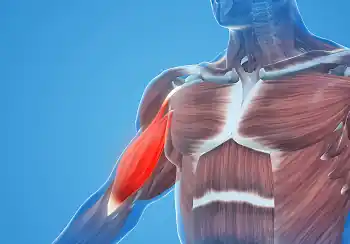
Biceps Tendonitis Causes, Symptoms & Treatment Options
What Is Biceps Tendonitis and How Is It Treated?
The biceps muscle is connected to the shoulder by two tendons: the long head and the short head. The long head biceps tendon runs through a groove in the upper arm bone and attaches at the top of the shoulder socket. This tendon is particularly vulnerable to irritation due to its position and the demands placed on it during overhead activity. When it becomes inflamed, the resulting condition is known as biceps tendonitis, sometimes also spelled tendonitis.
Biceps Tendonitis Causes
Biceps tendonitis causes typically involve repetitive stress on the tendon over time. Common contributing factors include:
- Repetitive overhead activities such as throwing, swimming, or weightlifting
- Age-related degeneration of the tendon tissue
- Poor posture or shoulder mechanics that place excess load on the tendon
- Underlying shoulder conditions such as rotator cuff tears or impingement syndrome
Athletes who participate in overhead sports, manual laborers, and individuals who perform repetitive upper-body movements are at elevated risk for developing this condition.
Biceps Tendonitis Symptoms
Common biceps tendonitis symptoms include:
- A dull ache or sharp pain at the front of the shoulder
- Tenderness along the biceps groove in the upper arm
- Pain that worsens with overhead activity, lifting, or carrying objects
- Aching that radiates down the front of the upper arm
- Weakness in the shoulder or biceps during activity
Because biceps tendonitis frequently occurs alongside other shoulder conditions, such as rotator cuff tears and shoulder bursitis and tendonitis, a comprehensive evaluation is important to ensure all contributing factors are identified and addressed.
Biceps Tendonitis Treatment Options
Dr. Duany begins with the most conservative approach appropriate for your condition. Treatment may include:
- Rest and activity modification to reduce ongoing stress on the inflamed tendon
- Anti-inflammatory medications to manage pain and swelling
- Physical therapy to improve shoulder strength, flexibility, and biomechanics
- Corticosteroid injections for targeted relief when other measures are insufficient
For patients who do not respond to conservative care, or whose biceps tendonitis is associated with significant tendon damage, surgical options may be considered. The two most common procedures are biceps tenotomy, in which the tendon is released from its attachment point to relieve pain quickly, and biceps tenodesis, in which the tendon is reattached at a new location to preserve biceps strength and function.
Both procedures can be performed arthroscopically, allowing for a minimally invasive approach and a more efficient recovery. If biceps tendonitis is occurring alongside a proximal biceps rupture or a rotator cuff condition, Dr. Duany may recommend addressing both issues during the same procedure when appropriate.
Frequently Asked Questions
What are the most common biceps tendonitis symptoms?
The most common biceps tendonitis symptoms include pain and tenderness at the front of the shoulder, aching that extends down the upper arm, and discomfort that worsens with lifting, overhead activity, or carrying. Some patients also notice weakness in the shoulder and biceps. Because these symptoms can overlap with other shoulder conditions, it is important to see an experienced orthopedic shoulder specialist for a thorough evaluation and accurate diagnosis before beginning any treatment.
What causes biceps tendonitis, and how is it diagnosed?
Biceps tendonitis causes most often involve repetitive overhead stress, age-related tendon degeneration, or an underlying shoulder condition such as a rotator cuff tear or impingement. Diagnosis involves a physical examination, a review of your activity history and symptoms, and imaging studies such as an MRI or ultrasound to assess the condition of the tendon. Dr. Duany conducts a comprehensive evaluation to identify not only the biceps tendonitis itself but also any associated conditions that may be contributing to your pain.
What is the difference between biceps tenotomy and biceps tenodesis?
Both procedures address a damaged or chronically inflamed biceps tendon and will maintain biceps function, but they work differently. A biceps tenotomy involves releasing the tendon from its attachment point, which relieves pain quickly and is often a good option for older or less active patients. A biceps tenodesis reattaches the tendon at a new location on the humerus, preserving cosmetic appearance. Dr. Duany typically performs tenodesis over tentotomy.
How do I find an orthopedic shoulder specialist near me in Louisville, KY?
If you are searching for an orthopedic shoulder specialist near you in the Louisville area, Dr. Duany makes it simple to get started. Fill out our online appointment request form or give us a call at (502) 629-5633, and our team will follow up to confirm your visit. Dr. Duany sees patients at two convenient Louisville locations and is dedicated to providing expert, personalized shoulder care to patients throughout the metro area. We look forward to helping you find relief and get back to full activity.